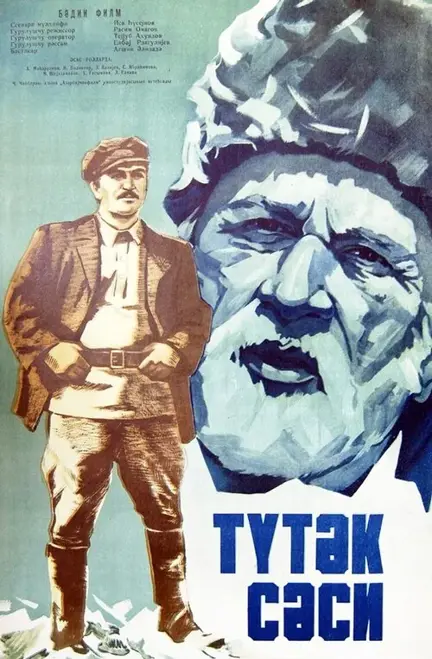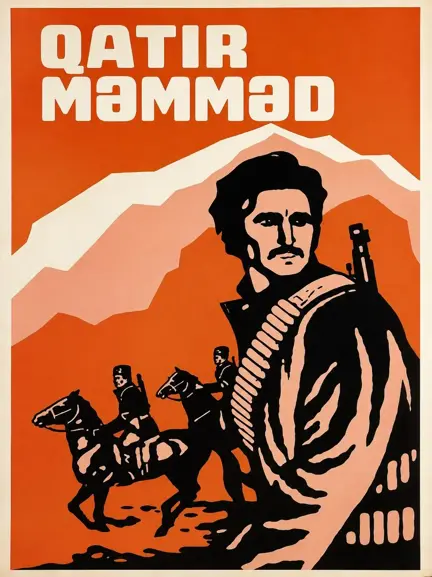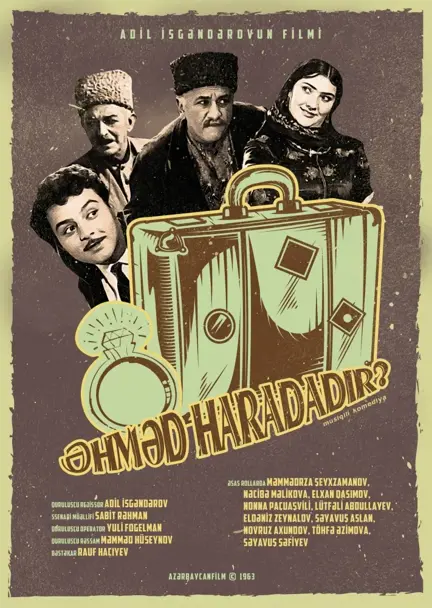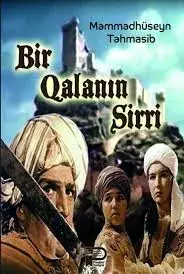
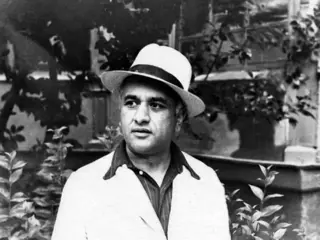
Mammadrza Sheykhzamanov was born in 1915 in Ganja. He lost his father at the age of two, and from that moment his mother, Boyukkhanim, had to carry the whole burden of the family on her shoulders. A housewife until 1917, she began working at a textile factory in Ganja after the revolution, earning bread for the household. According to Maarif Teymur, director of the Salman Mumtaz Azerbaijan State Archive of Literature and Art, after the collapse of Azerbaijan's 23-month republic of 1918–1920, the 'purges' carried out among supporters of independence did not spare the Sheykhzamanov family either. Mammadrza's grandfather, the official Naghi Sheykhzamanov, and his close relatives were subjected to repression, leaving a sorrowful mark on the family's fate. They were persecuted over the smallest things and faced immense hardship and difficulty. These hardships showed through, to some degree, in Mammadrza Sheykhzamanov's art as well. He was granted the People's Artist title he deserved only much later, in 1974. Mammadrza Sheykhzamanov himself told all of this to Maarif Teymur... Having finished primary school in 1929, Mammadrza entered secondary school, where he stood out among teachers and pupils for his talent, upbringing, education and knowledge. His interest and passion for acting were already taking root during his school years, so while still studying he joined a theatre studio. In 1934 he was invited to the theatre on the initiative of Habib Ismayilov, director of the Jafar Jabbarli Ganja State Drama Theatre. He made his debut in a small role as Brahma in A. Hamid's play 'The Indian Girl'. This became the future actor's first successful step on the road toward the professional theatre stage and the peak of his art. Working in the theatre, he became acquainted with the demands of professional creative work and absorbed the fine traditions of the acting art in Azerbaijan. During this period he created memorable images in 'Vagif' (Eldar), 'Farhad and Shirin' (Farhad), 'Yashar' (Imamyar), 'Two Brothers' (Yuri) and other plays. In 1954, by order of the Ministry of Culture, he began working at the M. Azizbayov Azerbaijan State Academic Drama Theatre, and from that time on the 'green light' of his artistic path began to burn ever brighter. He became better known and loved for the diverse array of characters he created. On the theatre stage he created, each in his own distinctive way, psychological and dramatic characters as different from one another as Shahbazov in 'The Eye Doctor', Polixenes in 'The Winter's Tale', Khosrov in 'Farhad and Shirin', Qajar in 'Vagif', Othello in 'Othello', Aydin in 'Aydin', Qachaq Nabi in 'Qachaq Nabi', and Eldar in 'Vagif'. He performed his roles with such great acting skill that he could reveal the very character of the image itself. This is recalled by our towering actor, artistic director and head of the Azerbaijan State Academic National Drama Theatre, People's Artist Aliabbas Gadirov, who says that Mammadrza Sheykhzamanov was a remarkably charming and rare actor with a true stage and screen voice that stood out among others — a voice whose owner one recognised the instant one heard it. They performed as scene partners in 'The Song Stayed in the Mountains', 'The Devil', 'The Judgment of Time' and other plays. Mammadrza Sheykhzamanov performed heroic and comic roles with particular mastery, yet he could also skilfully handle characters of every different nature and register, being a thoroughly well-rounded actor. In life, too, he was a singular personality of firm character and rich worldview. He was brave and feared no one; he said to your face whatever was on his mind and never spoke behind anyone's back. He loved honesty dearly and always stood on the side of truth, regardless of who was involved. One could tell just by looking at him that he was a man who knew his place. He disliked crude, tasteless jokes, yet among close friends and colleagues salty, good-humoured jokes were never in short supply. In short, he was a true and typical example of an Azerbaijani man. Mammadrza Sheykhzamanov first appeared on the big screen in 1955, in the role of Rajabov in the film 'Bakhtiyar', opening his first successful path in cinema. He later appeared in most of the films produced by the Jafar Jabbarli 'Azerbaijanfilm' State Film Studio. Over the years he created such characters as Ali kishi in 'Under the Scorching Sun', the Dervish in 'Leyli and Majnun', Dr. Eldostu in 'The Secret of a Fortress', Colonel Gurbanov in 'Can She Be Forgiven?', the Governor of Ganja in 'Gatir Mammad', and Sheikh Azam in 'Nasimi'. In 1963 our great artist appeared as Shirin kishi in the musical comedy 'Where Is Ahmad?', staged by Adil Iskandarov based on a screenplay by Sabit Rahman. 'Where Is Ahmad?' was the only film for which Adil Iskandarov, regarded as a symbol of Azerbaijani art, worked as a film director. While serving as director of the Academic Drama Theatre, he had already become closely acquainted with writer-playwrights such as Sabit Rahman, Samad Vurgun, Ilyas Afandiyev and Anvar Mammadkhanli, and this friendship continued after he was appointed manager. At the time, several works were being kept in the film studio's 'folder' awaiting adaptation, but Adil Iskandarov took a liking to 'Where Is Ahmad?' and decided to make a film out of it. The director himself chose the actors to play the roles in the film. Alongside well-known artists such as Nadjiba Malikova, Mammadrza Sheykhzamanov, Mustafa Mardanov, Aliagha Aghayev, Lutfali Abdullayev and Bashir Safaroghlu, he also cast young actors such as Sayavush Shafiyev, Tohfa Azimova, Sayavush Aslan, Novruz Akhundov and Eldaniz Zeynalov. At that time, for the first time in the history of Azerbaijani cinema, five actors were sent to the film studio by state assignment. Khamis Muradov, Elkhan Gasimov, Tofig Mammadov, Abdul Mahmudbayov and Fikrat Aliyev were nicknamed 'Adil Iskandarov's Five'. On the director's initiative, this five took part in episodic roles and crowd scenes in the film, working also as assistant directors. Elkhan Gasimov played the character of the driver Ahmad. Filming took place in Baku, Ganja, Goygol, Shamkir and Hajikand. All the dance scenes and the shots involving Bashir Safaroghlu were filmed at the 'Green Theatre'. Abdul Mahmudbayov recalls that they were proud to work shoulder to shoulder with Azerbaijan's towering artists in the film and eagerly sought to learn the secrets of the craft from them. He was captivated then not only by Mammadrza Sheykhzamanov's art but also by his personality. A great actor and a fascinating person, Mammadrza Sheykhzamanov was a true man of theatre and cinema. He was one of those artists who never made demands by leaning on his greatness or professionalism. Being an easy-going and creative artist, he was easy to work with and left a pleasant impression on everyone. Mammadrza Sheykhzamanov was, above all, a generous man with a pure heart and an open soul. He spoke to everyone in their own language, treating elders as an elder and children as a child. Among his relatives, friends and acquaintances he had a nickname — 'the good man'. In 1975 Mammadrza Sheykhzamanov created another memorable character, appearing as Isfandiyar kishi in the film 'The Sound of the Pipe', directed by Rasim Ojagov from a screenplay by Isa Huseynov. Gentleness, tenderness, humanism and love of peace were, in general, traits characteristic of Mammadrza Sheykhzamanov's nature. Mammadrza Sheykhzamanov passed away on 25 January 1984 at the age of 68.