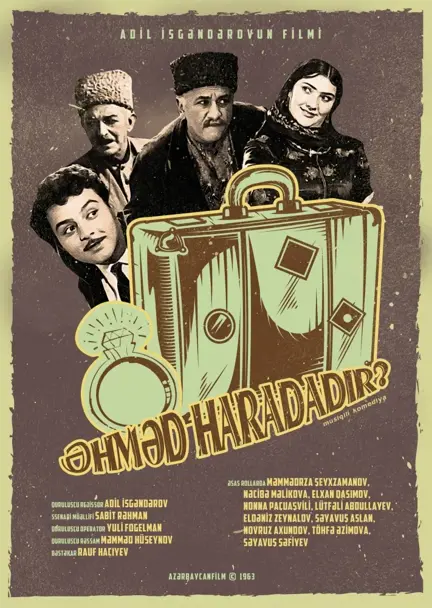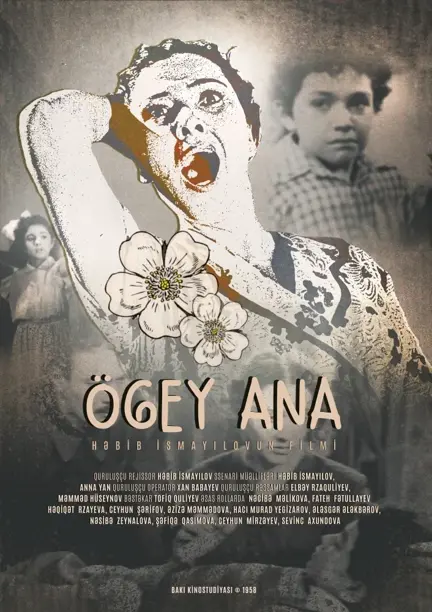
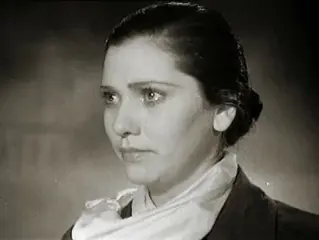
Najiba Hashim gizi Malikova, who first became famous as a film actress but whose main creative path was linked to the art of theatre, was born on October 25, 1921, in the village of Buzovna near Baku. She received her early education in the village and in Baku. She graduated from People's Artist Fatma Gadri's class at the Baku Theatre School (1940–1943). Of her own accord she went to work at the Ganja State Drama Theatre. After appearing in several productions there, she returned to Baku and enrolled in the newly established Azerbaijan State Theatre Institute, graduating from it in 1951. While still studying at the technical school, she had played episodic roles in productions of the National Drama Theatre; from 1952 (with brief breaks for film work) she worked at that same theatre. Najiba Malikova performed roles primarily in the dramatic — and to a lesser extent comedic — works of classical and contemporary Azerbaijani playwrights and world writers. She appeared in productions of: Huseyn Javid's "Sheikh Sanan" (Khumar) and "Siyavush" (Farangiz); Abdurrahim bey Hagverdiyev's "Pari the Sorceress" (Shamama the sorceress); Jafar Jabbarli's "Aydin" (Boyukkhanim), "In 1905" (Sona), and "Sevil" (Ediliya); Mirza Ibrahimov's "Life" (Atlas) and "The Village Girl" (Aykhanim); Ilyas Afandiyev's "In the Crystal Palace" (Goncha) and "The Strange Boy" (Malahat); Nabi Khazri's "Echo" (Zarifa) and "Mirza Shafi Vazeh" (Zubeyda); Samad Vurgun's "Vagif" (Khuraman); Maqsud Ibrahimbayov's "Rhinoceros Horn" (Dilafruz); Sabit Rahman's "Aligulu Gets Married" (Yasaman) and "Winds" (Firuza); Shikhali Gurbanov's "What a Fine Mess We're In" (Malahat); Mirza Fatali Akhundzade's "The Vizier of the Lankaran Khan" (Shola khanim and Ziba khanim) and "Monsieur Jordan and the Dervish Mastali Shah" (Shahrabani); Alexander Ostrovsky's "The Girl Without a Dowry" (Ogudalova); Huseyn Mukhtarov's "Who Is Guilty?" (Korinkina); Maxim Gorky's "The Zykovs" (Sofia Ivanovna); Nazim Hikmet's "Fame, or the Forgotten Man" (Hakim's wife) and "In Turkey" (the minister's daughter); Carlo Goldoni's "A Curious Mishap" (Marianna); Alexander Shirvanzade's "Honour" (Susanbar); Friedrich Schiller's "The Maid of Orleans" (Agnes); and Lope de Vega's "The Star of Seville" (Estrella). Mrs Najiba also created successful roles in cinema. Among these, her performances as Dilara in "The Stepmother", Aygun in "Aygun", Aunt Jahan in "The Cloth Peddler", and Aunt Nargiz in "Where Is Ahmad?" stand out as valuable achievements of her career. Najiba Malikova was a graceful, emotional, lyrical-dramatic actress. She excelled at playing pure-hearted heroines — characters who appeared vulnerable and grew tender amid the complications of love, but who, with the help of kind-hearted people, preserved their fortitude. In her humour, too, gentle, tender lyricism predominated. Najiba Malikova died in Baku on July 27, 1992, and is buried in the Second Alley of Honour.