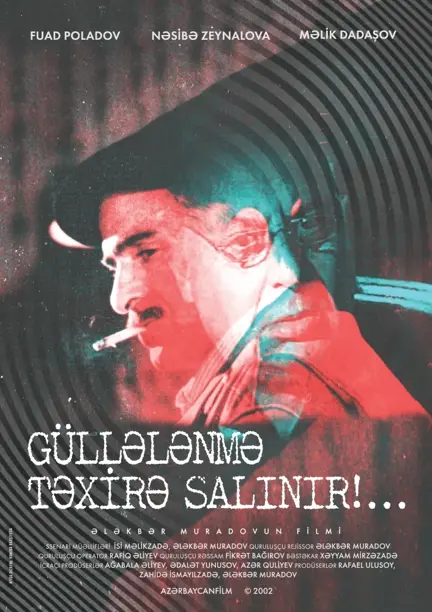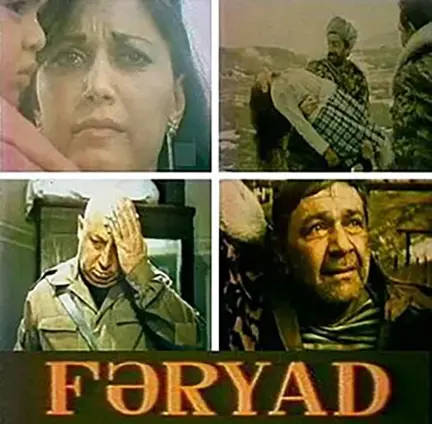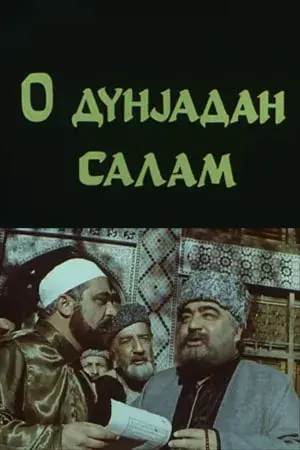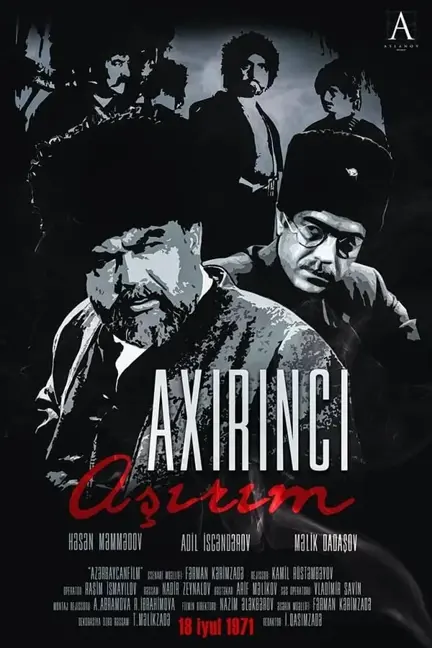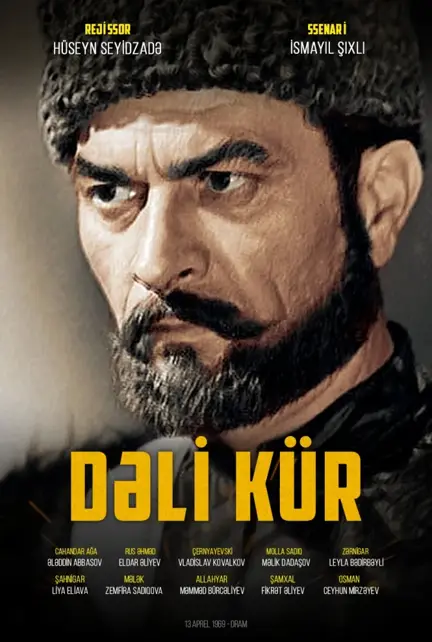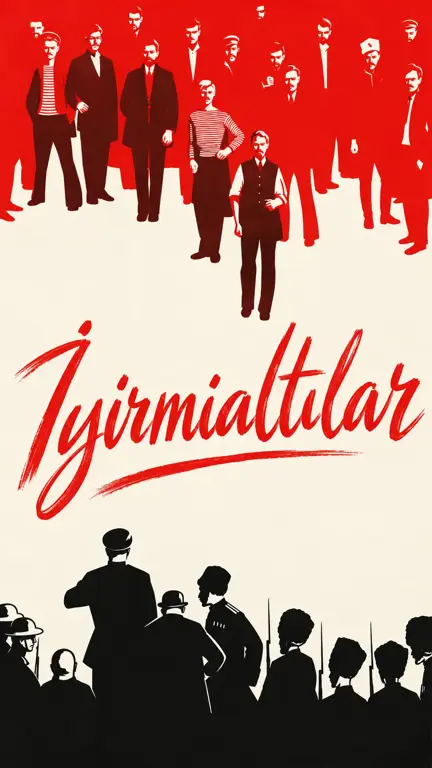
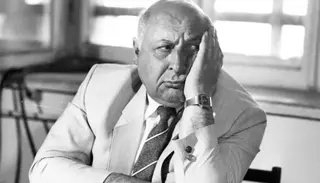
Malik Dadashov was born on June 7, 1924, in Baku. Having taken part in the Second World War, the actor suffered a head injury and was treated for it over a long period. In 1945 he began his acting career at the Young Spectators' Theatre. After graduating in 1950 from the Azerbaijan Theatre Institute (now the Azerbaijan State University of Culture and Arts), he joined the M. Azizbeyov Academic Drama Theatre, where he first performed in H. Mukhtarov's play "Family Honour". The beginning of his career coincided with a period of powerful development in Azerbaijani national theatre art. At that time, the Azerbaijani stage was graced by A. Alakbarov, M. Mammadov, Adil Iskandarov, and dozens of other luminaries of the art. This fertile artistic environment had a strong influence on his creative biography and soon brought him into the ranks of our stage's most powerful artists. Malik Dadashov made a special contribution to the formation of the Azerbaijani school of acting. He chose a manner of performance born of the synthesis of classical and modern acting art. His work showed the influence of H. Sarabski, A. M. Sharifzade, and other classic masters of ours. Malik Dadashov was a masterful performer of dramatic roles. He found such fine means of expression for the characters he created that even historical heroes came to feel very close to reality. His portrayals of historical figures such as M. Azizbeyov and N. Narimanov confirm this once again. Malik Dadashov was a People's Artist. Indeed, the people loved him greatly. At times, expressions used by his characters even entered common speech. Recall the phrases in Gamlo's ("The Last Pass") dialogues with Karbalayi Ismayil. Surely the line "You're playing with Abbasgulu bey's whim quite a bit, eh, Karbalayi" is familiar to everyone. He played the role of Sheikh Nasrullah in "The Dead" many times on the stage of the Academic Theatre. It is often said that M. Dadashov was a classic performer of negative characters. Sheikh Nasrullah, Gamlo, and Molla Sadig were all negative characters. But look closely at the acting mastery in these roles. Malik Dadashov's Sheikh Nasrullah is a world of its own. Perhaps that is why the late film director Tofig Taghizade also cast Malik Dadashov as Sheikh Nasrullah in his film adaptation of the play "The Dead", titled "Greetings from the Other World". Historical figures, too, came across very convincingly in Malik Dadashov's performances. Film director Ajdar Ibrahimov cast the actor in several of his films. In "The Twenty-Six" and "The Stars Never Fade", he was able to immortalise on screen very realistic historical portrayals of M. Azizbeyov and N. Narimanov. In the television production based on People's Writer I. Afandiyev's play "The Atayev Family", the character of Atayev, created by M. Dadashov in a new type of role, was a highly successful screen achievement. Gamlo in "The Last Pass" is among the most memorable characters in our cinema as a whole. By skilfully bringing out all the characteristic traits of this character, the actor became the bearer of the film's main dramatic weight. It must be noted with regret, however, that for his outstanding performance of a male role he was not included among the award winners at the former Soviet Union's festival. It was said at the time that an enemy of the Soviets (Gamlo) could not receive a "Soviet" award. And there was also Molla Sadig in "Crazy Kur". This character, too, occupies a special place in Azerbaijani cinema. M. Dadashov worked in our theatre until the end of his life. The characters he created in productions such as W. Shakespeare's "Twelfth Night", L. Tolstoy's "The Living Corpse", S. Vurgun's "Farhad and Shirin", Sh. Gurbanov's "Without You", and I. Gasimov's "When the Tale Begins" remain unforgotten to this day. In the final years of his life, the actor worked at the S. Vurgun Russian Drama Theatre. During his time as director there, the theatre's repertoire was considerably enriched and new creative talents were drawn into it. From the 1980s he also taught the art of acting at the Azerbaijan State University of Culture and Arts.