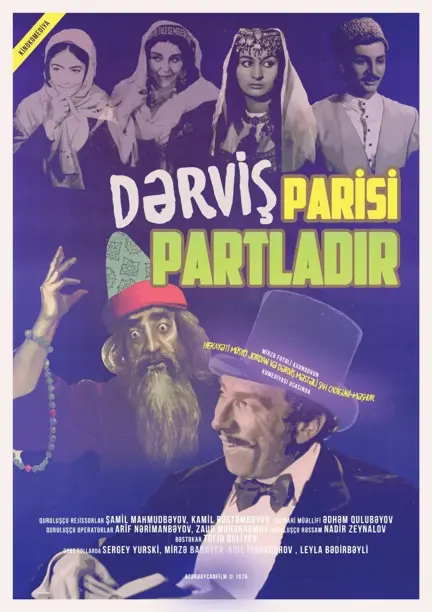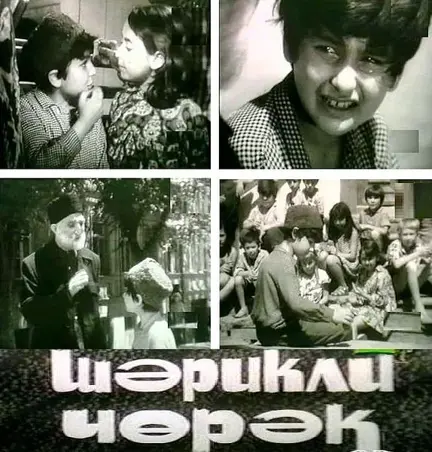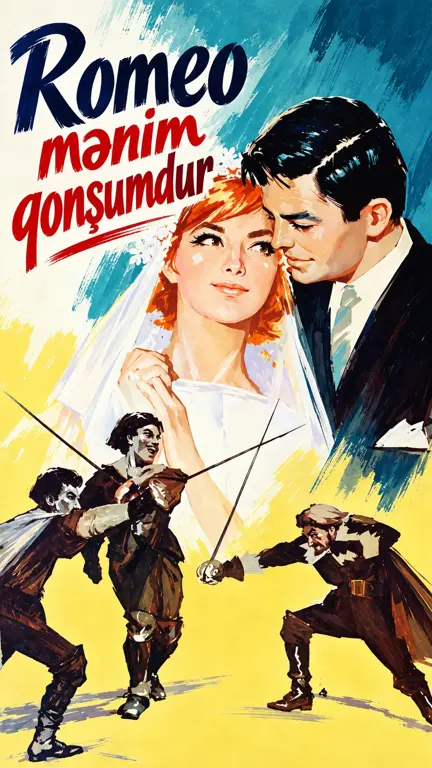
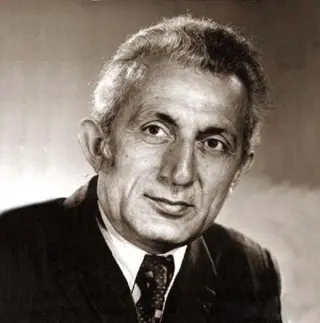
Shamil Mahmudbeyov was born on 6 February 1924. In 1943 he joined the army and took part in a number of bloody battles of the Great Patriotic War. After being discharged, he entered the All-Union State Institute of Cinematography in Moscow, where he was a student of director S. Gerasimov and actress T. Makarova. From 1954 he worked as a director at the Baku film studio. He worked as second director on the films "The Meeting" (1955) and "Black Stones," and, to test himself, made documentaries about book delivery by post, workplace safety at a factory, Azerbaijan's centenarians, and socialist construction in Nakhchivan. The director's first cinematic work was the short film "Earnings by a Crooked Path." As a continuation of his creative work, Sh. Mahmudbeyov made the lyrical comedy "Romeo Is My Neighbour," the film-novella "The Dark Girl" (1966), included in the almanac of the same name, and, in various genres, the films "Earth. Sea. Fire. Sky," "Life Tests Us," "The Violin's Adventure," "Four Sundays," "The Dervish Blows Up Paris" (together with K. Rustambeyov), "When the Owl Comes," "In the Fire," and "The Tale of a Lonely Pomegranate" (together with H. Turabov). The director's greatest fame came from the film "The Shared Bread," made in 1969, which was included in Azerbaijan's Golden Fund. Shamil Mahmudbeyov was awarded the State Prize for the film "The Shared Bread." The film deals with the first years after the Great Patriotic War. Shamil Mahmudbeyov was also an actor, masterfully performing the role of the outlaw Alimardan in the film "The Invincible Battalion," and the negative character of the Armenian Samvel in the feature film "Cry," dedicated to the Nagorno-Karabakh conflict. Stricken by a severe illness, the director was unable to complete his final television films, "The Wall" and "Man."