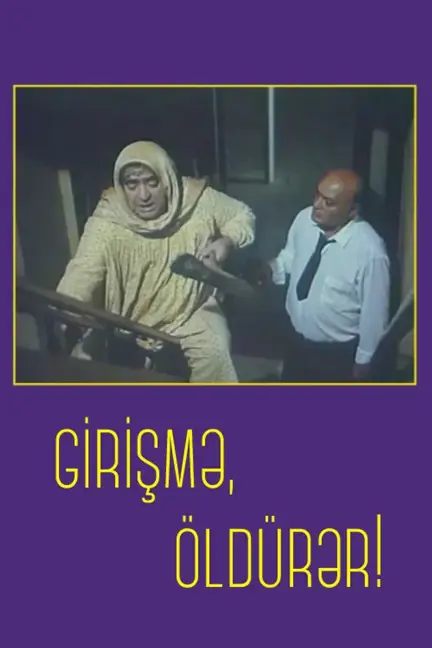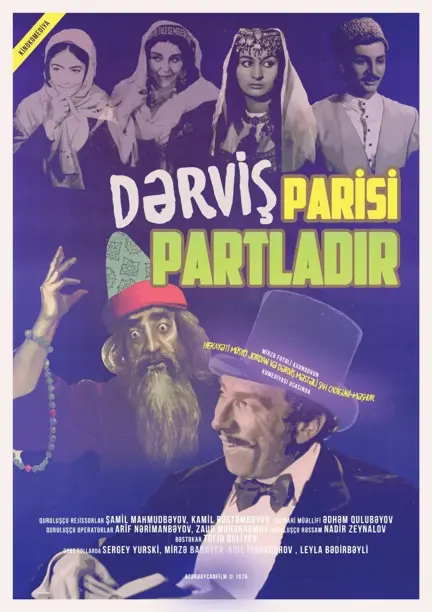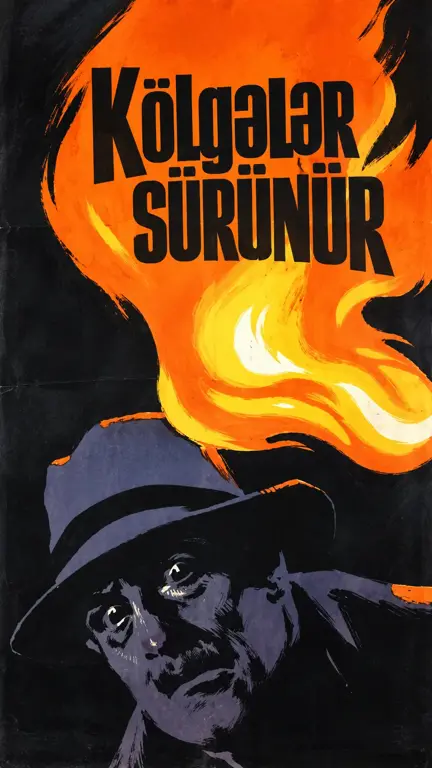
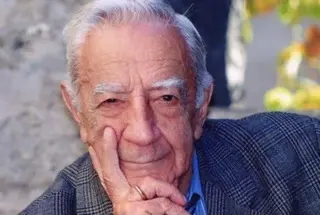
One of the founders of Azerbaijani pop music, Mirza Babayev was born on 16 July 1913 in the village of Mashtaga in the city of Baku. Mirza Babayev came from the "Aghshalvarlilar" quarter of the Inner City (Icharishahar). His family home was on M.A. Sabir Street in the Inner City. Although Mirza Babayev was a native of Baku, he would never say "I am a Bakuvian" — he would tell others not to say that either, but rather "I am from Baku", because true old-stock Bakuvians were in fact very few, and Mirza Babayev was one of them. Mirza Babayev's father, Abdul Jabbar, was a supporter of modernity and used to travel back and forth to Paris from time to time. He had seven sons and one daughter, and he paid serious attention to his children's education — almost all of them studied either in St Petersburg or in Moscow. Mirza Babayev's interest in music most likely came from his mother. His mother, Sona khanum Khanlarova, used to play the accordion for her friends whenever she invited them over. Before Mirza Babayev appeared on the big stage, he performed in 1932 at the Industrial Institute where he studied, now the Azerbaijan State Oil and Industry University. He also performed at the "Metropol" restaurant, which stood on the site of what is now the "Sabina" shop on Natavan Square. At that time restaurants did not yet have microphones, and singers performed through a megaphone. After finishing the Industrial Institute, Mirza Babayev enrolled at the Azimzade Art School. Before he began engaging seriously in music, he worked both as an architect and as an artist. After returning from the war (incidentally, during the war Mirza Babayev fought in Rostov, received the rank of lieutenant and returned with four or five medals), the "Vatan" cinema, as well as several administrative buildings in Ganja and Aghdam, were built according to his design. He also took part in the design of the halls of the Nizami Museum. He received his higher education at the architecture faculty of the M. Azizbekov Industrial Institute. Mirza Babayev is the author of the design of many buildings and museums in Baku and other cities of Azerbaijan. In 1948 he enrolled at the Azerbaijan State Conservatory in the class of the famous singer Bulbul. Bulbul even wanted to train him as an opera singer, but according to the People's Artist of the Republic of Azerbaijan Tofig Guliyev, Mirza's voice was better suited to performing pop songs. He also performed in the jazz orchestra founded by Tofig Guliyev under the Ministry of Internal Affairs. It is acknowledged that Mirza Babayev was the first performer of Azerbaijani pop music, yet for some reason he is not recognised as a jazz performer, even though Tofig Guliyev always mentioned his name whenever speaking about this stage of our music. In general, Mirza Babayev was close to Tofig Guliyev. Tofig Guliyev, in turn, composed the music for many films. He used to say that whenever Mirza also appeared in a given film, even if the screenplay did not call for a song, he would write one anyway, so that his performance would remain on that reel of film. This was the case with the film "The Dervish Blows Up Paris". In the first episode in which the dervish appears on screen, the song he sings was not in the script — Tofig Guliyev wrote that song specifically for Mirza Babayev. Mirza Babayev appeared in more than 40 films — not only in Azerbaijan, but also in films produced at the Odessa, Tashkent and Ashgabat film studios. When "Not Him, But Her" was being filmed, they reportedly wanted to cast him in the role of Mashadi Ibad, but someone stood in the way; in the end, only the musical numbers for Mashadi Ibad were entrusted to him. In general, during the Soviet period there were many who did not accept Mirza Babayev's manner of performance or his stage movements. Singers were expected to remain static on stage. But that was simply not who Mirza Babayev was — his performances were accompanied by a variety of movements. Even the chanson style itself was not readily accepted. Besides being the founder of the pop genre in Azerbaijan, Mirza Babayev was also practically the only singer performing in the chanson style. Today there are almost no such singers left. The chanson performers of that era sang lyrical songs on the theme of love. Tofig Guliyev and Emin Sabitoglu wrote chanson songs specifically for Mirza Babayev, while Oktay Rajabov and Vasif Adigozalov, though they did not compose in that style deliberately, still had their songs turned into chansons in Mirza Babayev's performance. He worked for many years at the Azerbaijan State Philharmonic. On 24 May 1960 he was awarded the honorary title of "Azərbaycan SSR əməkdar artisti", and on 4 March 1992 the title of "Azərbaycan Respublikasının xalq artisti"; he was twice a laureate of the "Humay" award. From 2002 he received a presidential pension. He passed away on 13 January 2003, at the age of 89.