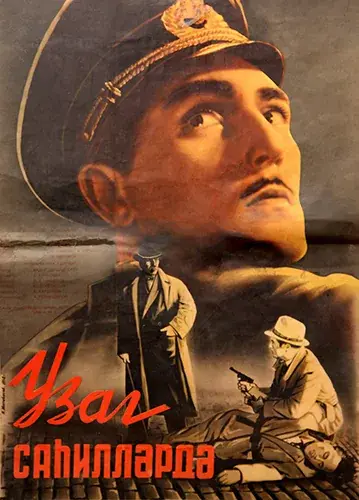
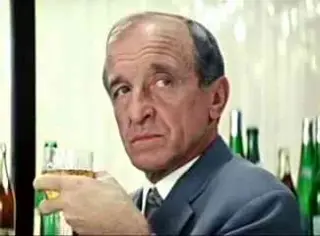
Andrei Andreyevich Fait was born on 29 August 1903 in the Russian city of Nizhny Novgorod. He was a member of a family of German merchants who had moved to Russia in 1812. His father, Andrei Fait, was a doctor and was also actively engaged in politics — a member of the Socialist-Revolutionaries' Communist Party, he was arrested several times and sent to Eastern Siberia. In 1905 Andrei Fait's father fled to France with the help of his patients. His wife and two sons later joined him there. They lived in a camp for Russians near Paris, where young Andrei attended a lycée. Later his mother returned to Moscow with the children, and some time afterwards their father joined them there too. Andrei Fait joined a drama club called "Ke-Ke-Si." Five of the club's organisers wrote poetry, painted and acted; Andrei alone composed music. Andrei Fait studied at the Engineering Institute attached to the Russian Air and Naval Forces. In 1927 he graduated from the State Institute of Cinematography and worked as a film actor at a theatre studio. He made his screen debut in 1924 in the film The House of Doves. While still young Fait published a collection of poems titled The Burning Waterfall. After Alyosha Maslennikov's play The Salvation of the Great Degenerates was staged, he made the firm decision to become an actor. He is remembered as "Soviet cinema's chief criminal," having created an unrepeatable range of criminal characters — from foreign agents to cruel sorcerers. Andrei Fait married twice. From 1928 to 1930 he was married to the actress Galina Kravchenko. With his second wife, Maria Brilling, he had a son, Yuli, who became a film director. The actor died at the age of 72, on 16 January 1976.