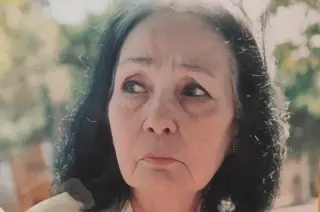
S. Hashimova was born in 1940 in the city of Sumgait. Since 1968 she has worked at the Sumgait State Musical Drama Theatre. From 1959 S. Hashimova performed a variety of roles at the People's Theatre created under the J. Jabbarli House of Culture in Sumgait. Her role of Shirin in S. Vurgun's Farhad and Shirin won a "Gold Medal" at an All-Union festival. During her ten years at the Sumgait State Theatre, S. Hashimova became a favourite of audiences for her characterful roles. From 1978 to 1990 S. Hashimova worked at the Aghdam State Drama Theatre, and from 1990 to 1992 at the Fizuli State Drama Theatre. Since 1992 the actress has worked at the H. Arablinski Sumgait State Musical Drama Theatre. Making her debut with the role of Esmeralda (in Yes, the World Has Changed), S. Hashimova has created dozens of memorable characters on the stage of the Sumgait theatre. Among them: Gulush (Sevil, by J. Jabbarli), Gulcahan (The Young Men of Our Village, by A. Ilham), Fez (The Curious Savage, by John Patrick), Gulcamal (Fakhraddin's Misfortune, by N. B. Vazirov), Naza (Duel, by M. Baydzhiyev), the judge's daughter (The Sword of Damocles, by N. Hikmet), Nami (A Strange Brand, by Holfred), the mischievous girl (Pulse of the Parallel, by R. Heydar), and Tahir (Faith, by F. Mammadov), among others. Svetlana khanum created the role of Sara in J. Jabbarli's Faded Flowers with great sincerity, passion and emotion. Working at the Sumgait theatre since 1992, S. Hashimova has created the grandmother in A. Hasanoglu's tragedy The Tale of the Burnt House, Gulbala in F. Mammadov's His Mother's Beloved Child, the fugitive grandmother in A. M. Laladagh's play The Coward, the Mole in O. Kolchinskaya's play Who Stole the Tram, grandmother Gulcahan in F. Maharramov's work The Jinn Children, aunt Sakina in Y. Hashimov's comedy The Doctors Are on Duty, Munavvar in T. Valiyeva's play My White Dove, the Hare and Tamara in G. Khugayev's instructive plays There Was a Dog and Family, Yusif's mother in A. Shaig's work The Black-Eyed Girl, and many other long-remembered characters. In 2000 S. Hashimova was awarded the honorary title of Honoured Artist of the Republic. In 2006 S. Hashimova was awarded the Presidential Prize of the Republic.