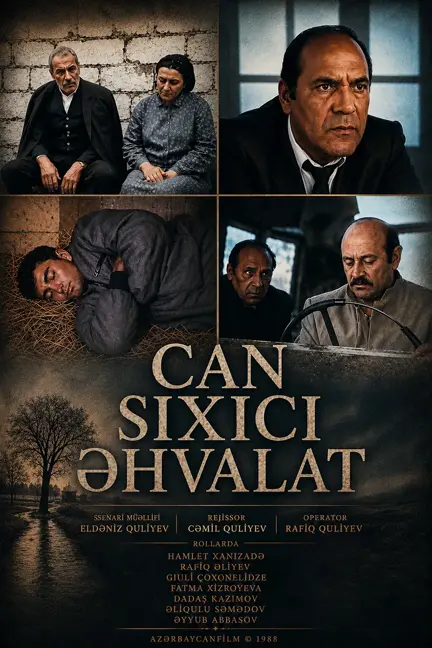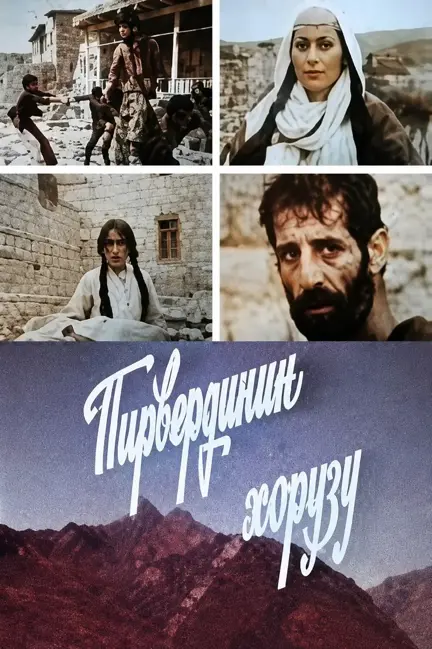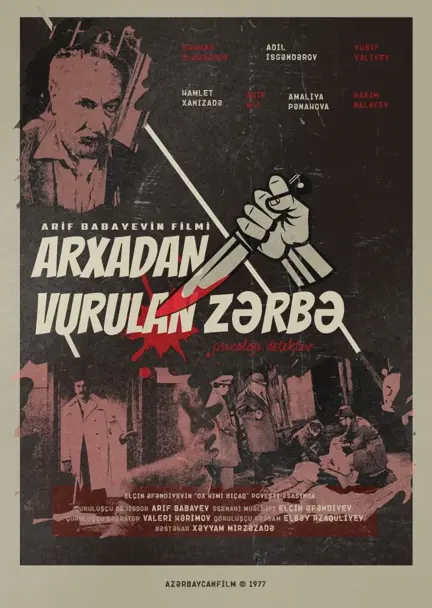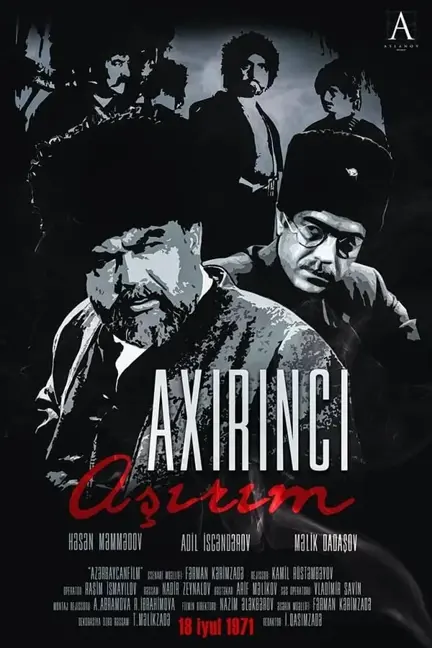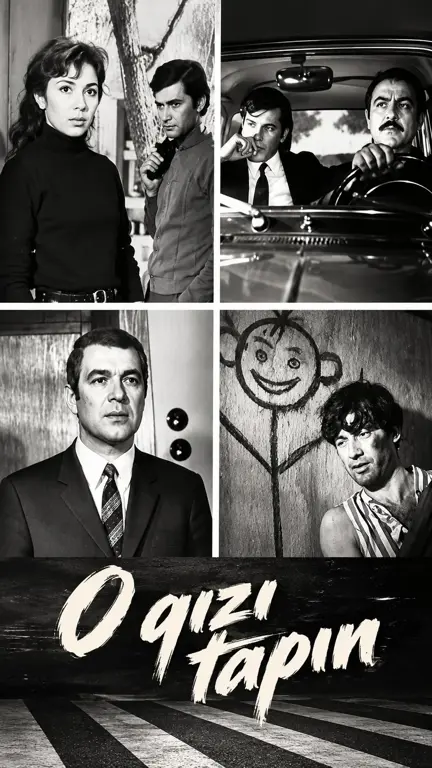
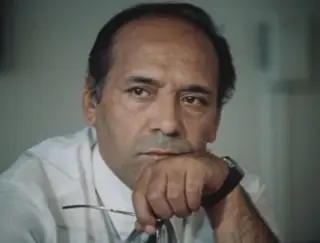
Hamlet Babir oghlu Khanizade was born in 1941. Hamlet Khanizade was born in the Shagan settlement of Baku. He received his secondary education there, and his father, Babir kishi, never wanted to see him become an actor. But the passion for acting that awoke in young Hamlet's heart overcame everything. This child, who bore the terrible pains of war even in infancy, had a fate filled with much suffering. From childhood Hamlet was drawn to theatre and cinema. He entered the Institute of Arts in the late 1950s, and by 1961 he had already come to work as an actor at the Academic Drama Theatre. Hamlet Khanizade proved himself a talented actor from his very institute years. The roles he created in the student theatre won a place in the hearts of both his teachers and children. I do not know which role he played first, or with whom he shared the stage. I only know that he loved this art with all his heart, and his first role was, without doubt, created in the spirit of that love. He performed in many plays. His stage partners were the very "stars" of the Azerbaijani theatre stage — Mehdi Mammadov, Aliagha Aghayev, Aghasadig Garaybayli, Ismayil Osmanli, Hokuma Gurbanova, Ismayil Dagistanli. Hamlet Khanizade worked alongside such masters of the craft and absorbed the secrets of the art. The theatre was also a school for him. Hamlet Khanizade matured here and found the way to the hearts of audiences. They loved him, they applauded him. When one thinks of Hamlet, the character of Topal Teymur comes to mind first. Every time one watches this television play, the cruel appearance of the Topal Teymur he played does not fade from the audience's memory for a long time. The actor chose a highly original style of his own for the portrayal of this character. When comparing Yusif Valiyev's Topal Teymur in the film "Nasimi" with H. Khanizade's hero, one can clearly sense the similarities. In "Dali Yighinjaghi" ("The Madmen's Assembly"), "Iblis" ("The Devil"), "Oluler" ("The Dead") and other plays, there were so many heroes whom Hamlet played with his whole heart and soul. Every time he came on stage, the audience's applause was endless. Hamlet Khanizade portrayed Molla Abbas in Jalil Mammadguluzade's "The Madmen's Assembly," Nizami in Nariman Hasanzade's "The Atabeys," and the doctor in Nazim Hikmet's "Fame and the Forgotten Man" with the mastery of a great artist. He also performed in works from the treasury of world literature, in plays by F. Schiller and W. Shakespeare. He came to cinema in the 1970s. Do you remember the character of Gizir in Tofig Taghizade's film "I Want Seven Sons"? Gizir, the "striking hand" of Garay bey, is a resourceful man. He is capable of weighing everything carefully. By highlighting these qualities of his hero, Hamlet elevates him to the level of the film's main characters. Hamlet also loved cinema very much, and in the last years of his life he leaned even more toward it. He was often invited to films, and sometimes to dubbing and to "Mozalan" as well. He was an energetic man. Work never tired him — as long as the roles suited him, or rather, "became" him. He was first filmed by director Hasan Seyidbeyli in "Find That Girl." He performed, and proved himself. Then director Kamil Rustambeyov filmed Hamlet in "The Last Pass." Talibov Gamlo, who together with Abbasgulu bey travels to the village of Garabaghlar to bring Karbalayi Ismayil to reason, incurs his wrath. Talibov is a fearless, brave hero who does not remain indifferent to human fate. Do you remember the actor's expression during those frightening moments at Karbalayi's reception? These scenes were created with great talent. Hamlet Khanizade was a true master of such dramatic scenes. But Imash (in "A Blow from Behind") is a hero worked in an entirely different register. He has seen life's hardships and been battered from stone to stone. He has also lived through prison life. His name is mentioned even in the smallest crimes that occur. But he knows nothing of Gamarlinski's murder. His sister, for her part, spoils his mood. He loves Fazil, who is from a family he does not favor. Against the backdrop of these complex events his character is revealed. Hamlet performs these episodes with such talent and mastery that the audience becomes a witness to true acting artistry and cannot help but love him. No one can remain indifferent to the fate of this young man in his striped prison garb. In "The Last Pass" his role is not so large, but Hamlet Khanizade created this Bolshevik character with great talent. One of Hamlet's most successful screen characters is Imash in "A Blow from Behind." Imash, too, is not the main character, but through his acting he presents the role at such a high level that it rises to the level of the main characters. Hamlet's role in this film is one of the most interesting characters in our cinema. He portrayed Caliph Mu'tasim in the film "Babek." Although his role in this historical film is not very large, it is a historical figure who influences the overall course of events. Hamlet created it successfully and made us love it. And finally, Sadi Afandi in "The Day of the Execution." Sadi Afandi is a generalized image of a writer and philosopher. We see him ill, and we sense that this man will not recover from his illness. The actor masterfully lives through all the pains of this man who has passed through a thousand and one torments of his time, and makes us love him, just as he himself loved him. It was no coincidence that Hamlet was invited to "The Day of the Execution," filmed on the basis of Yusif Samadoghlu's novel of the same name. Sadi Afandi is a character who has passed through life's trials and lived the fate of an artist. As complex as this character is, it is equally contradictory. He is a generalized image of the hundreds of people of art who fell victim to the repressions of the 1930s during that painful period of history. Hamlet Khanizade found very original details for the portrayal of Sadi Afandi and was able to convey all his suffering and anguish through the features of his face. In the contemporary-themed film "The Scoundrel" (directed by V. Mustafayev), he plays a factory director. With this character, the actor once again proves himself a fine performer of contemporary roles as well. Regardless of which role he was filmed in, the actor keenly understood the responsibility of the role he played. He found common language with directors very easily. He was an extremely sincere, businesslike man. Those who knew him said that Hamlet would never touch people's hearts himself. Yet his roles, on the contrary, were of cruel, tyrannical, bloodthirsty people. Hamlet Khanizade was an actor with a strong creative potential. His rich inner world allowed him to create roles of very different character. He was an Honoured Artist. The people loved him. His reward was a state prize, and also the love he earned in the people's heart. That love exists today, and it will exist tomorrow. Hamlet Khanizade worked until the last days of his life. He worked, moreover, with enthusiasm, without tiring. The events of 20 January 1990 shook him terribly as well, and one day these pains silenced his heart forever. That was on 3 February of that year. He was not even granted the chance to see the fortieth day of our martyrs. Hamlet Khanizade was a very sensitive man. An actor who defended the honour of the nation and the people, and who was ready even to go to his death for its sake, became a victim of the tragedy of 20 January. He was not buried in the Alley of Martyrs, but laid to rest in the cemetery of his native village.