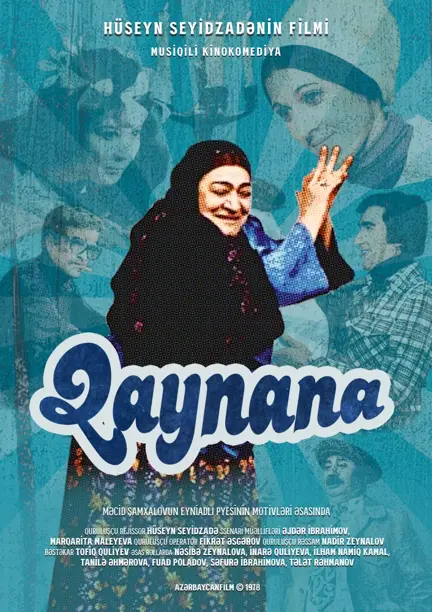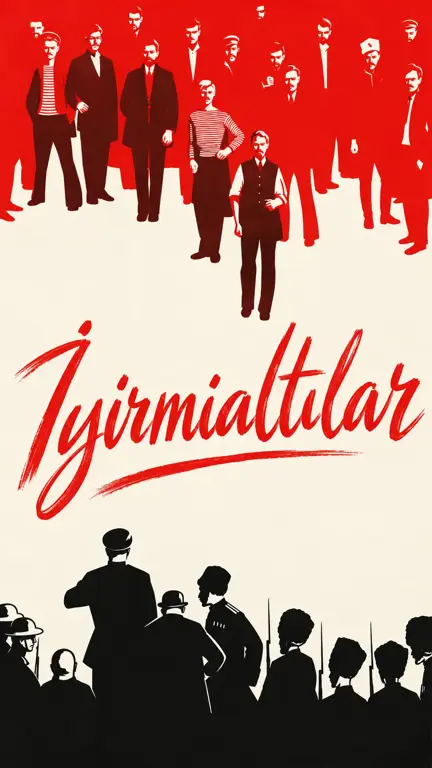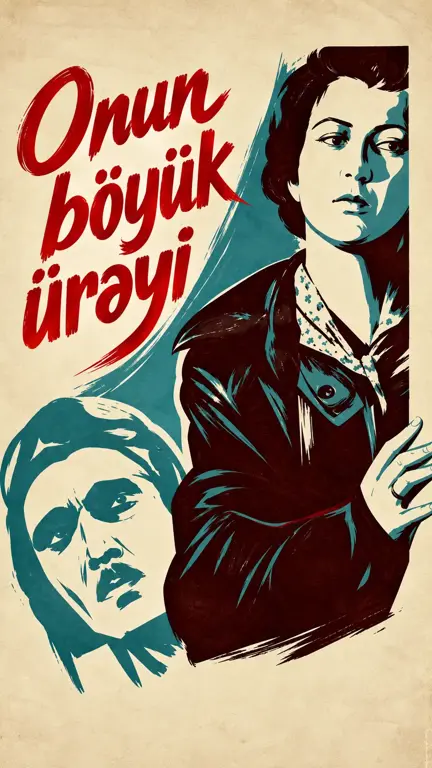
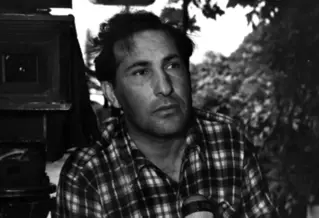
Ajdar Ibrahimov was born in Ashgabat, where he also received his secondary education. In 1940 he graduated from the Ashgabat Theatre School, and in 1952 he graduated from the Film Directing Faculty of the All-Union State Institute of Cinematography (VGIK) in Moscow, completing the workshop of Sergei Yutkevich and Mikhail Romm, and was a participant in the Second World War. In 1952 he returned to Ashgabat, to the "Turkmenfilm" studio, where he directed "Firuzə", "Xəzərin şərqində" and other films. From 1954 to 1959 he worked at the Baku Film Studio. In 1955 he served as second director on Latif Safarov's "Bəxtiyar" and Tofig Taghizade's "Görüş". His first major work as director at the Baku Film Studio came in 1957, when he co-directed, together with Ilya Gurin, "Bir məhəlləli iki oğlan", a film jointly produced with Mosfilm. In 1958 he made "Onun böyük ürəyi", scripted by the writer Imran Gasimov. The film was about Sumgait and the vast construction work under way there, with a plot spanning the periods before, during and after the Great Patriotic War; the director himself appeared in it in the role of Rasulov. Vietnamese cultural figures who saw this film petitioned the relevant Soviet institutions to send the director to their country to help establish Vietnamese cinematography. Thousands of Vietnamese had applied to the newly opened Film School in Hanoi. Cinema in Vietnam was only just taking its first steps; a few documentaries had been made, but only Japanese and French films were being screened there. Now, however, Vietnam's own cinema was being created. Ajdar Ibrahimov travelled through most of Vietnam's regions, studying the people and their customs, and recruited children for the film school. Through a competitive selection, 53 students were admitted. After completing their studies, all of them — Vietnam's first professional film actors and directors — were awarded diplomas. Thus, from 1959 to 1962, he took an active part in establishing the first national film school in the Democratic Republic of Vietnam and in training national actors and directors. Under Ajdar Ibrahimov's artistic supervision, the films "İki əsgər", "Acgöz quş" and "Bir payız günündə" were created. After returning to Baku, he began production of the film "İyirmialtılar". Based on a screenplay by the writer Isa Huseynov, this film was considered one of the most valuable works of Soviet cinema and was awarded the "Qızıl budaq" prize at the All-Union Festival in Moscow. Shortly afterwards, Ajdar Ibrahimov created a sequel to that film, the historical work "Ulduzlar sönmür", which depicts the life and work of Nariman Narimanov. Ibrahimov later continued his career as a director at Mosfilm. His films "Ürək əhvalatları" and "Məhəbbətim mənim, kədərim mənim" (co-produced with Azerbaijanfilm) further enhanced the director's renown. He was awarded the honorary title of People's Artist of Azerbaijan and the State Prize. Ajdar Ibrahimov died in Moscow on 20 September 1993 and was buried in Baku's Alley of Honour. He was the husband of screenwriter Margarita Maleyeva.